

Mastering Split Logging: A Trucker's Guide is an 8-chapter course on the federal split sleeper berth provision, taught straight from the regulation. What counts as a legal split, how to recalculate your 11 and your 14 after one, how teams run it, how to log it on your ELD, and FMCSA's current guidance. Every example worked hour by hour, on screen.
Ask around a truck stop and you'll hear there are only two legal splits. The regulation doesn't say that. It sets three conditions, and any pair of rests that meets all three qualifies.
One rest period of at least 7 consecutive hours in the sleeper berth.
A separate rest period of at least 2 consecutive hours — off duty, in the berth, or both.
The two together add up to at least 10 hours. 8/2 and 7/3 work. So does 7.5/2.5. A 6/4 doesn't.
49 CFR §395.1(g)(1)(ii) · plus the driving-time test in (D), taught in Chapter 3
Have a schedule in mind? Check it with our free Split Sleeper Berth Calculator.
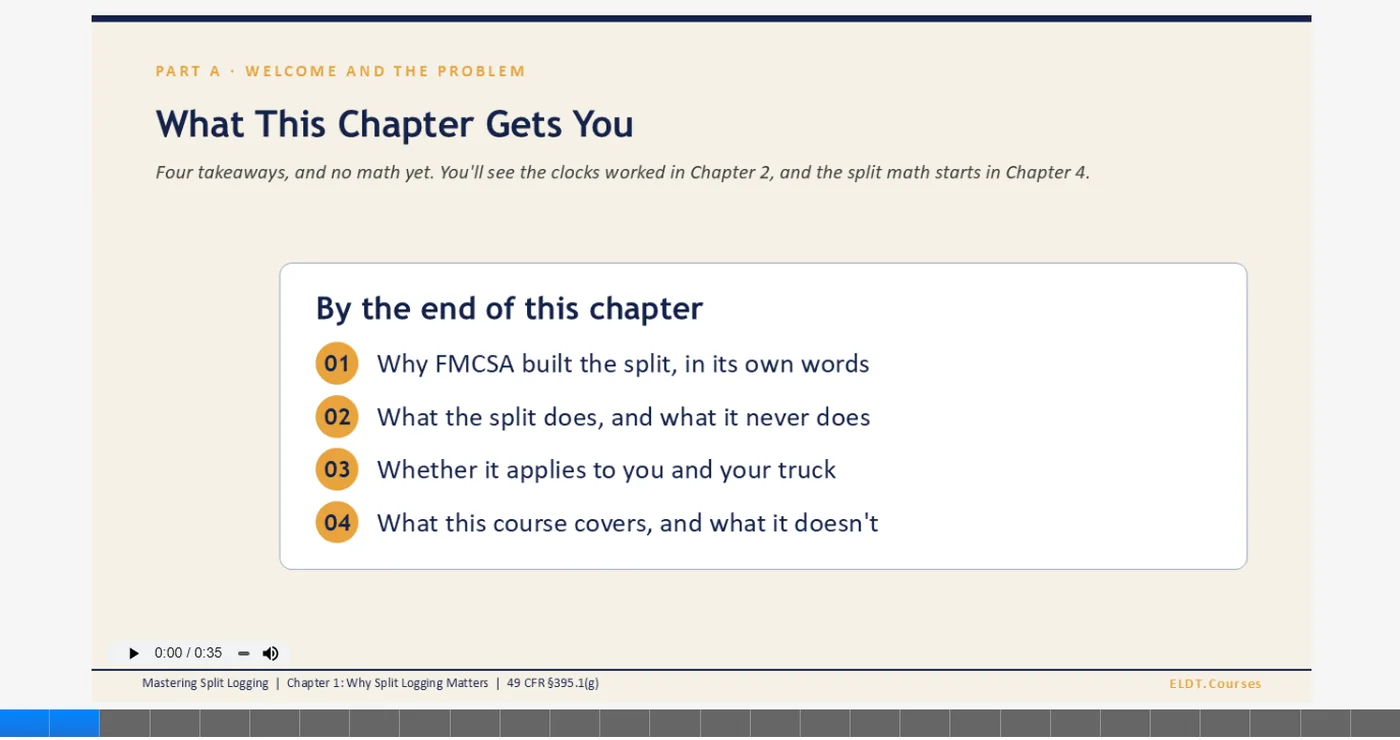
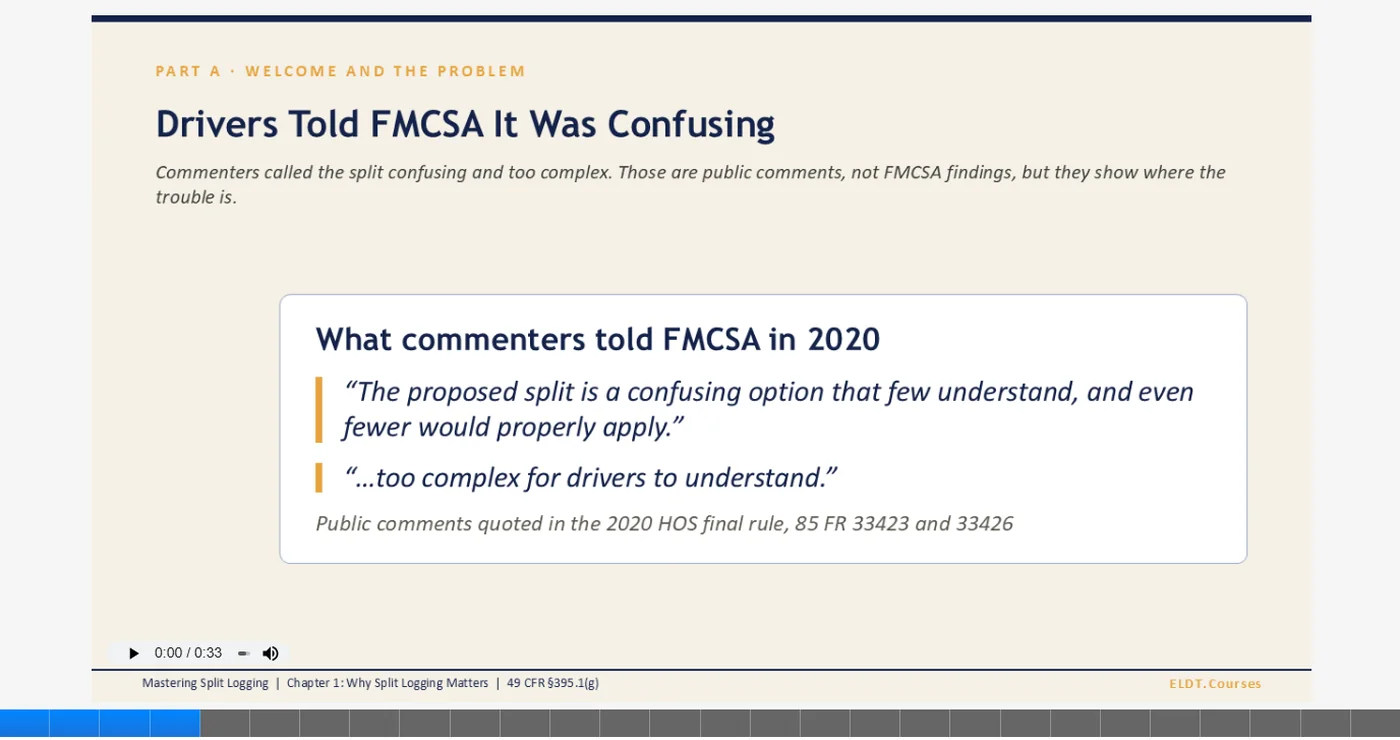
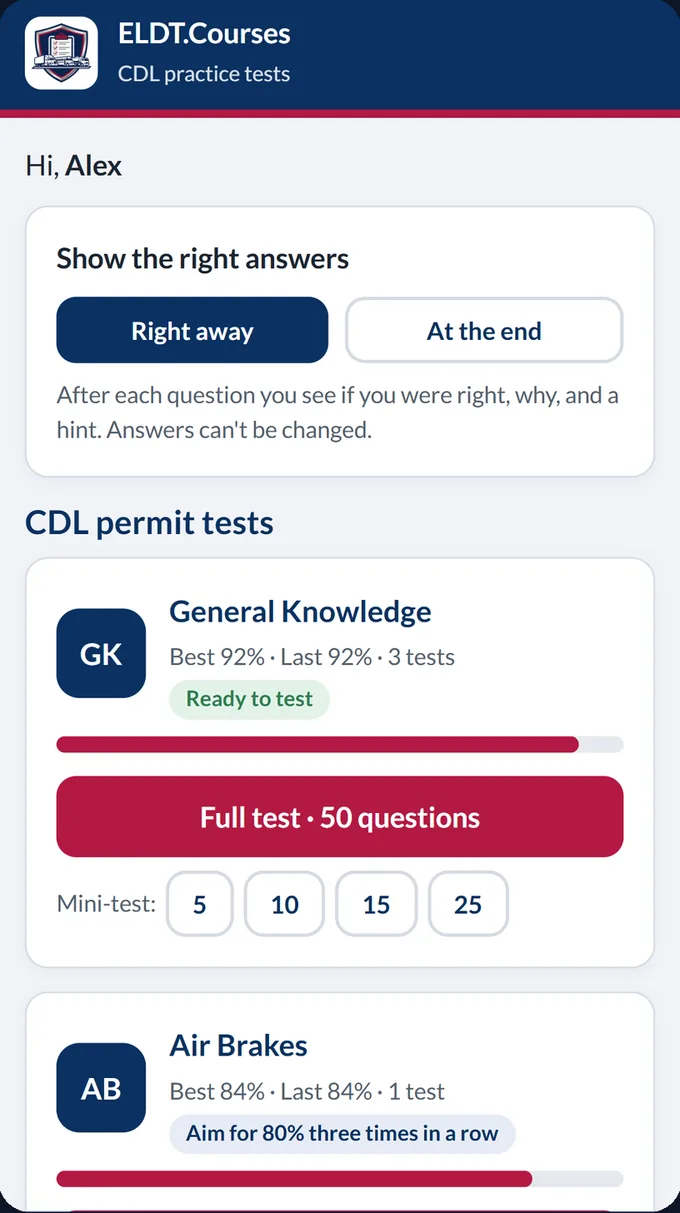
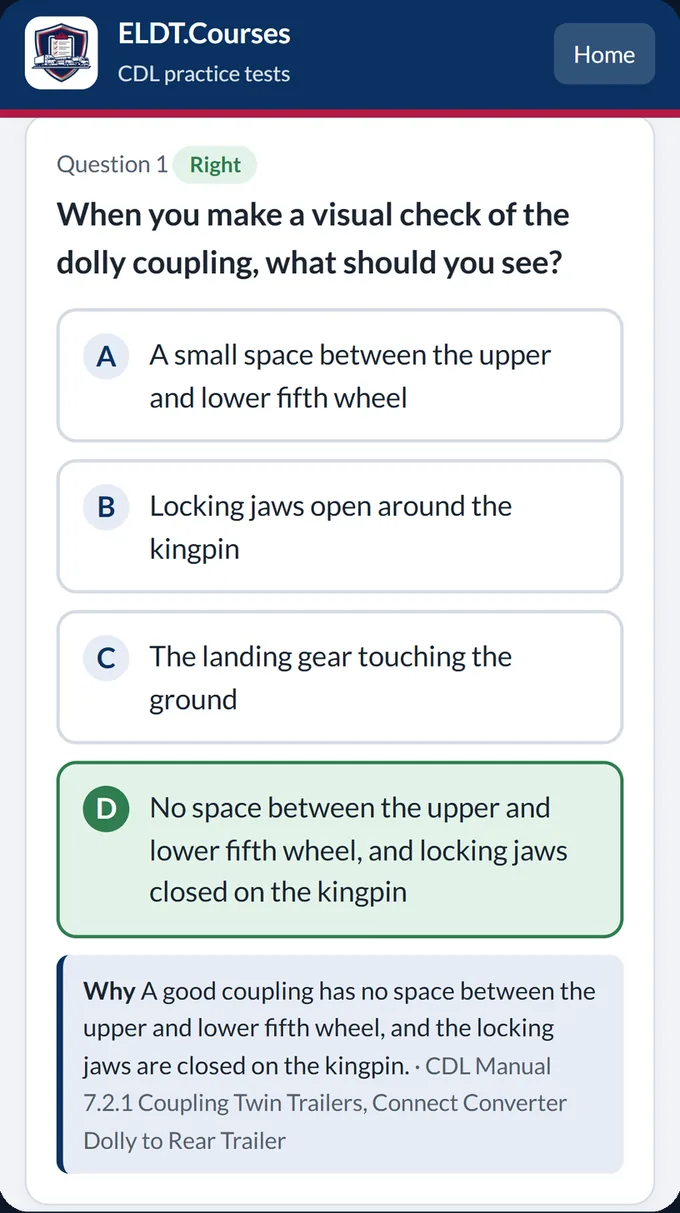
Real screens from Chapter 1 of this course, and the free practice app explaining each answer with the rule behind it. Everything works on a phone, a tablet or a computer, and you pick up where you left off.
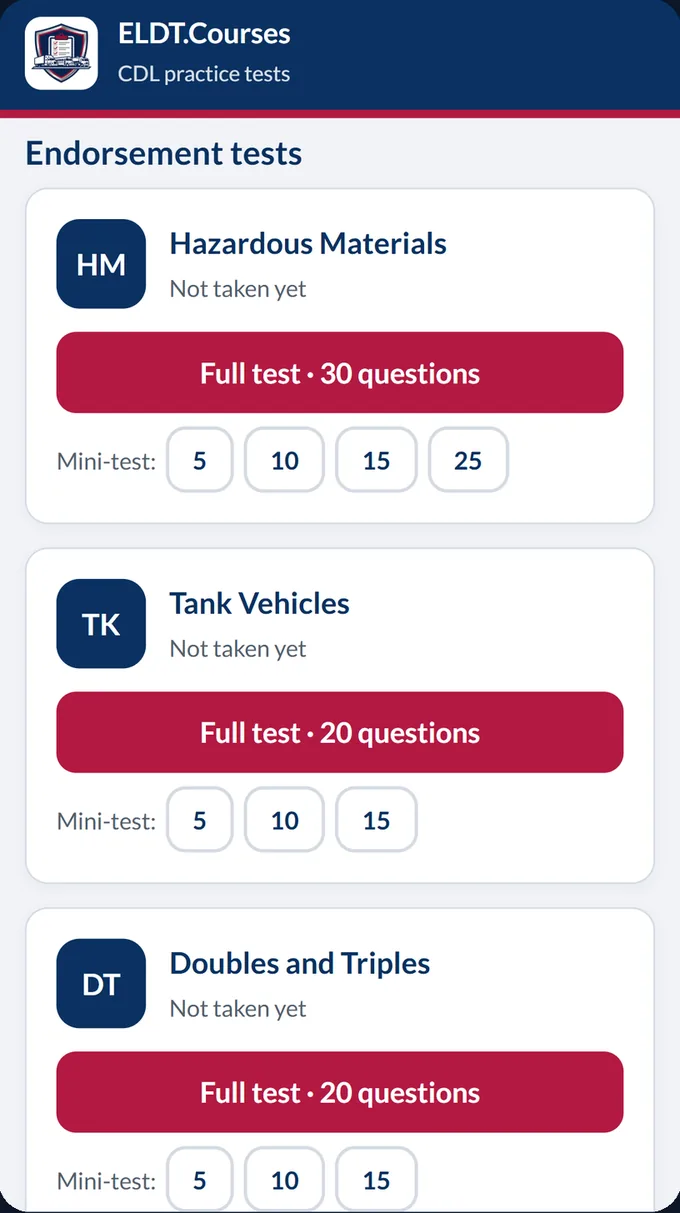
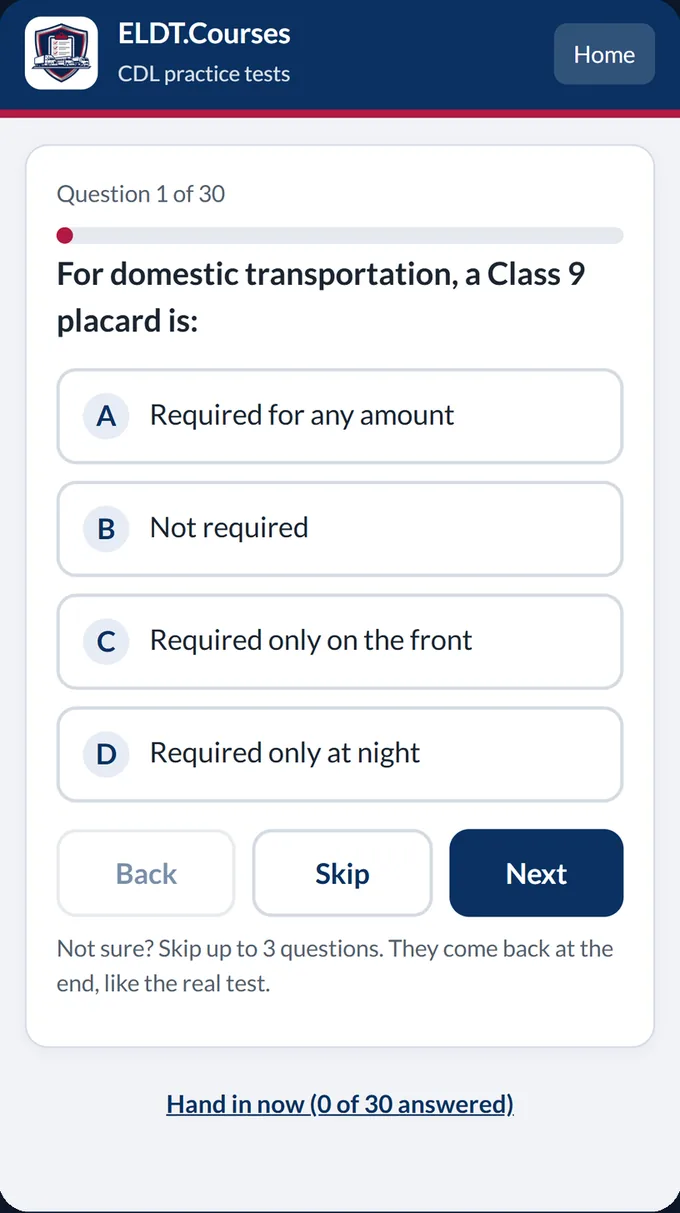
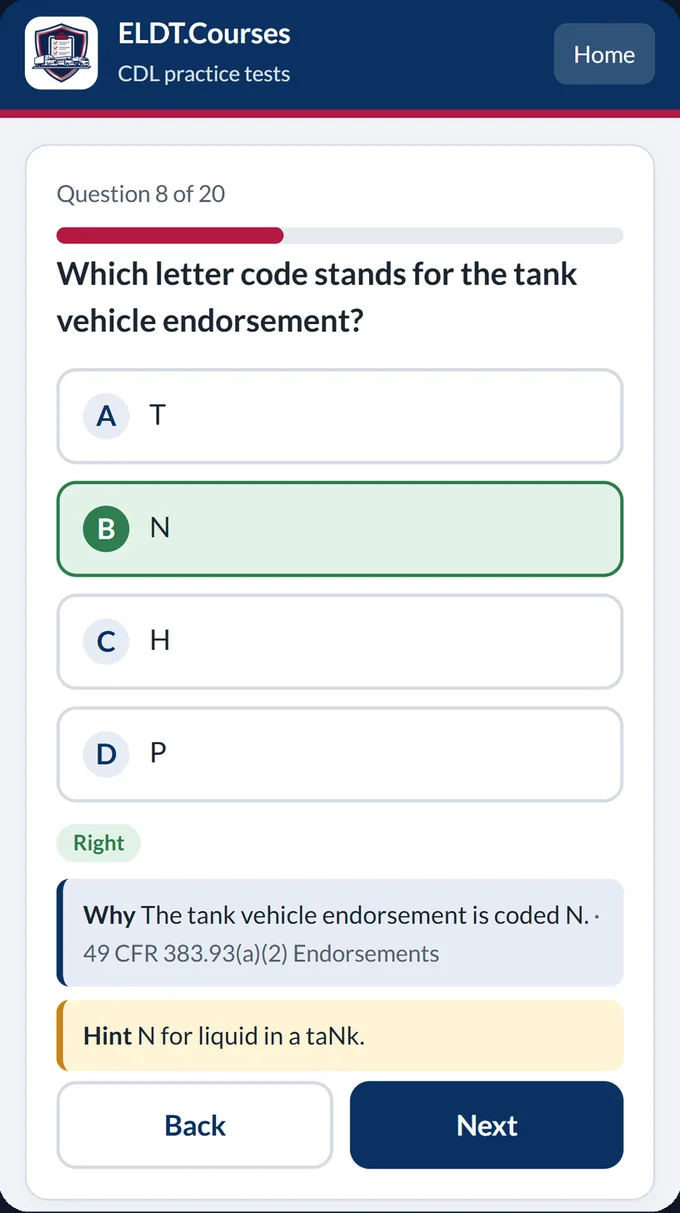
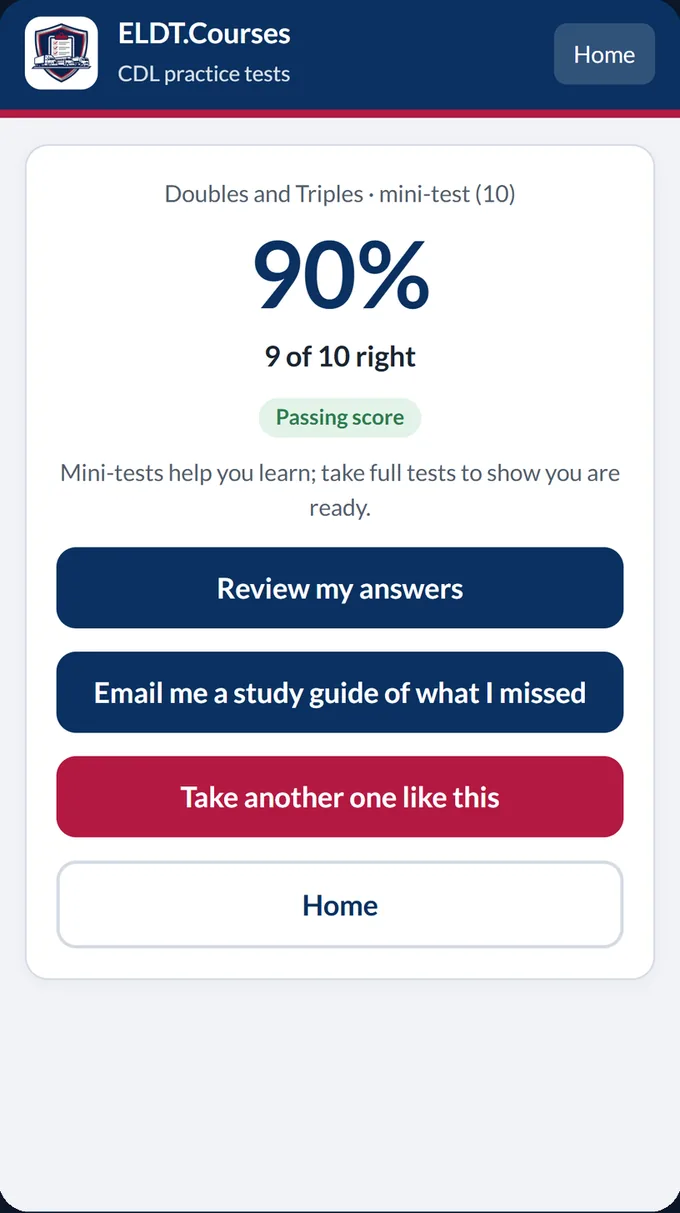
ELDT.Courses is listed on FMCSA's Training Provider Registry as an online theory provider. Search the registry for ELDT.Courses and you will find us, phone number and all: tpr.fmcsa.dot.gov/Search.
Every ELDT completion we report lands on your own driver record there by midnight of the second business day (49 CFR 380.717), so your state can see it before you test.
The split is one of the most flexible tools in the hours-of-service rules, and one of the easiest to get wrong. This course is for drivers of property-carrying trucks with a sleeper berth, and the people who dispatch and review them.
You've heard it's too complicated, or you took one once and it didn't come out the way you expected. This course walks through the rule one piece at a time, then works real days hour by hour until the recalculation makes sense.
Riding up front while your partner drives is usually on-duty time, not rest. A full chapter covers the team rules, the three-hour passenger-seat option, and complete two-driver schedules checked against every test.
If you plan loads around a driver's clock or review logs, you need to know when a split actually buys time and when it doesn't. The course covers the carrier's side too: records, edits, and what an ELD will and won't tell you.
Every chapter is narrated, and every calculation is shown on screen step by step. The source is 49 CFR Part 395 and FMCSA's own published guidance, and the course is updated as rules and regulations change.
What the split does for you, the two things it never does, whether it applies to your truck, and why FMCSA wrote it the way it did.
The four duty statuses, the 11-hour, 14-hour and 30-minute limits, 60/70, and the 34-hour restart — with worked days.
The rule text, condition by condition. What passes, what fails, what makes a bunk a legal sleeper berth, and the passenger-seat option.
How to work out your driving and duty time after a split, step by step. Rolling pairs, a second rest that doesn't qualify, and the 30-minute break inside a split.
Four drivers, four days — rush-hour traffic, a late unload, a snow closure, a delivery window — tallied hour by hour.
The on-duty trap in the passenger seat, full two-driver cycles for both drivers, and the team mistakes that show up on logs.
Logging a split on an ELD, edits and annotations, personal conveyance and yard moves, records, roadside inspections, and the common mistakes.
Adverse driving conditions, short-haul, the 16-hour exception, the carrier's responsibilities, and where FMCSA's split pilot programs stand.
8 narrated chapters, every example worked hour by hour, a test at the end of each chapter. Self-paced, and yours for life.
Enroll Now — $39 →A lot of split-logging advice is passed along secondhand, and some of it was never right to begin with. Here's how this course is different.
| Secondhand advice | This course | |
|---|---|---|
| Which splits are legal | “There are only two legal splits” | The three minimums in §395.1(g), quoted and explained |
| After the split | “Your 14 resets” | How it's actually recalculated, step by step |
| The math | “The ELD figures it out” | Every example worked hour by hour on screen |
| Team driving | “Riding up front is off duty” | The on-duty rule and the 3-hour passenger-seat option |
| Current guidance | Whatever was true years ago | FMCSA's current guidance and where the pilot programs stand |
| Instructor access | None | Direct email to the author |
One idea per slide. Take it a chapter at a time on your reset, or all at once.
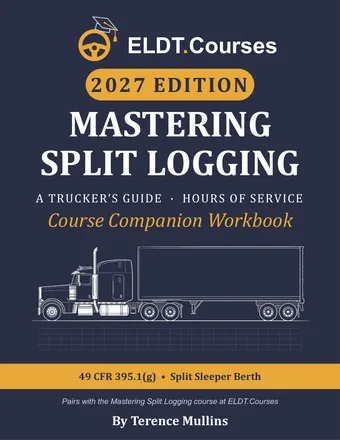
The course workbook is included as a PDF download inside the course at no extra charge.
Solo days, team cycles, and the mistakes — each one tallied on screen with driving time and 14-hour time left at every step.
Many of the questions are real scenarios. Retake them as often as you like.
Built on 49 CFR Part 395 and FMCSA's current guidance. When rules and regulations change, the course is updated — and enrolled students get the updates at no charge.
Not sure whether last night's pair qualified? Email me. You're not a ticket number here.
Your access doesn't expire. Pull up the recalculation chapter the next time a customer holds you at the dock.
When you finish, a certificate with your name, the course and your completion date is emailed to you automatically. It's yours to print and frame — a keepsake of the work you put in, not a license or a federal record.

I spent 10 years as an OTR driver before founding ELDT.Courses. The split sleeper rule isn't theory to me — it's the difference between sitting at a dock watching your 14 burn and rolling out legal when the load's finally ready.
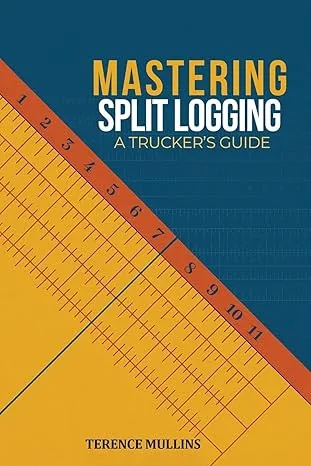
I wrote a book on split logging, and this course takes it further. Every chapter was rebuilt from the regulation itself and checked against FMCSA's current guidance. Where the rule is clear, the course says so. Where FMCSA hasn't answered a question, the course says that too, instead of guessing.

I've been around commercial trucking long enough to know what the standard endorsement course looks like — a recycled DMV manual, slow narration, and a quiz at the end. Drivers deserve better.
ELDT.Courses is what I wish I'd had when I was studying. Every chapter explains the why, not just the rule. Every quiz pulls from real test material. Every minute is paid for in attention, so I made sure none of them are wasted.
Have a question before you enroll? Pick a time and I will call you. Book a free phone call.
No. This is a standalone hours-of-service course built on the federal regulation itself, 49 CFR Part 395. It is not entry-level driver training (ELDT), and nothing is submitted to the Training Provider Registry for this course.
No. Under 49 CFR §395.1(g)(1)(ii), one rest period must be at least 7 consecutive hours in the sleeper berth, the other at least 2 consecutive hours off duty or in the sleeper berth, and the two must total at least 10 hours. 8/2 and 7/3 are common patterns, but FMCSA's own examples include 7.5/2.5. Chapter 3 covers what passes and what fails.
Not for drivers in general. FMCSA has announced pilot programs to study shorter sleeper berth periods such as 6/4 and 5/5, and only drivers enrolled in a pilot may use them. For everyone else, the berth period has to be at least 7 consecutive hours. Chapter 8 covers where the pilot programs stand.
Yes. FMCSA's current guidance says a 10-hour rest that includes at least 7 consecutive hours in the berth may either reset your clocks or be paired with a later rest of 2 hours or more, whichever works better for you. The course teaches the current guidance and labels it as guidance, not regulation.
Drivers of property-carrying commercial motor vehicles with a sleeper berth — solo or team — plus dispatchers and safety staff who plan or review their logs. Passenger-carrying drivers have different sleeper berth rules and aren't the focus of this course.
Don't count on it. FMCSA doesn't require ELDs to identify hours-of-service violations. The device records your time, but you're the one responsible for knowing whether your split qualifies and how much time you have left. That's exactly what this course teaches.
Yes. Take it a chapter at a time, on your own schedule, and come back to any chapter whenever you need it. Your access doesn't expire.
The course teaches the federal rules in 49 CFR Part 395. If you drive only within one state, check your state's rules for intrastate operations.
Try it risk-free. If you enroll and decide within 7 days that it's not for you — and you haven't started the course content — just email me and I'll refund you, no questions asked. Once you begin working through the material, the course is yours for life, including all future updates. Full terms are in our Terms of Service.
8 chapters. Straight from 49 CFR Part 395. Every example worked hour by hour. Lifetime access and real instructor support.
Enroll Now — $39 →Training a whole fleet on split logging? Volume inquiries welcome — email terry@eldt.courses or call 1-814-304-7635.